

Baland Al Rabayah is the co-founder and Director of BRG. He currently holds a Diploma in Accounting and Finance from Bangor University, a Bachelor of Science (BSc) in Accounting and Finance from Bangor University, and a Masters degree in Applied Economics from the University of Strathclyde. Baland will begin his PhD studies at the University of Strathclyde in 2022 looking at the economic effects of renewables on the GCC economies (energy transition). Baland’s interests are in Environmental, Energy, Public Policy, and Health Economics.
email: b.rabayah@bhres.group

analytical pieces

The COVID-19 pandemic is one of the most significant crises for the global economy. The pandemic had created a situation where nearly most aspects of society had faced a standstill in traditional forms of interactions. The consequences are that multiple sections of society had to suddenly adapt to unexpected conditions of the pandemic. In particular, this article will look at how the education sector in Bahrain adapted to the new challenges brought upon by the pandemic.

Climate change is a worldwide phenomenon that affects every nation. The risks that are part of climate change are increased adverse weather conditions, affecting coastlines, agriculture, and potentially overall economic activity. Although the GCC is one of the most affected regions for climate change, little is quantified about the costs and damages associated with climate change in our region. This article aims to create a simple analysis comparing economic growth vs. unexpected temperature differences for a given quarter.

In Bahrain and the GCC, it’s not a secret that motor vehicles have become the most predominant form of transportation domestically. Motor vehicles are reliable and a convenient form of transportation for Bahrainis and Expatriates. With multiple options, today ranging from sedans to SUVs, compared to the expatriate and Bahraini a century or so ago, the current population of Bahrain more or less are utilizing what would be considered luxury goods then. However, we should ask, at what cost does the rise of these goods have towards the economy? This is what we will explore in our article.

What is the relationship between output and employment in Bahrain? This article takes a quick look at the theory and actual results of what output and employment looks like by nationality in Bahrain. Does an increase in production result in higher employment rates amongst expatriates and Bahrainis? If so, why? Why do we see a relationship between output and employment? These are the items that we will address.

Recently, parliament has been debating the opening of a new 75.4 million Dinar (200 Million USD) tobacco plant in Bahrain, where the factory's approval has been subjected to many delays. Plans for the tobacco plant can be traced back to September 2019, where some MP members have urged such a plant's approval. Currently, Bahrain prohibits the manufacturing of tobacco products since the introduction of tobacco legislation in 2009. MPs have argued that the tobacco plant will generate jobs and growth towards the economy by opening the economy towards another industry and thus support the effort of diversification (although such goods have large externality costs towards society).
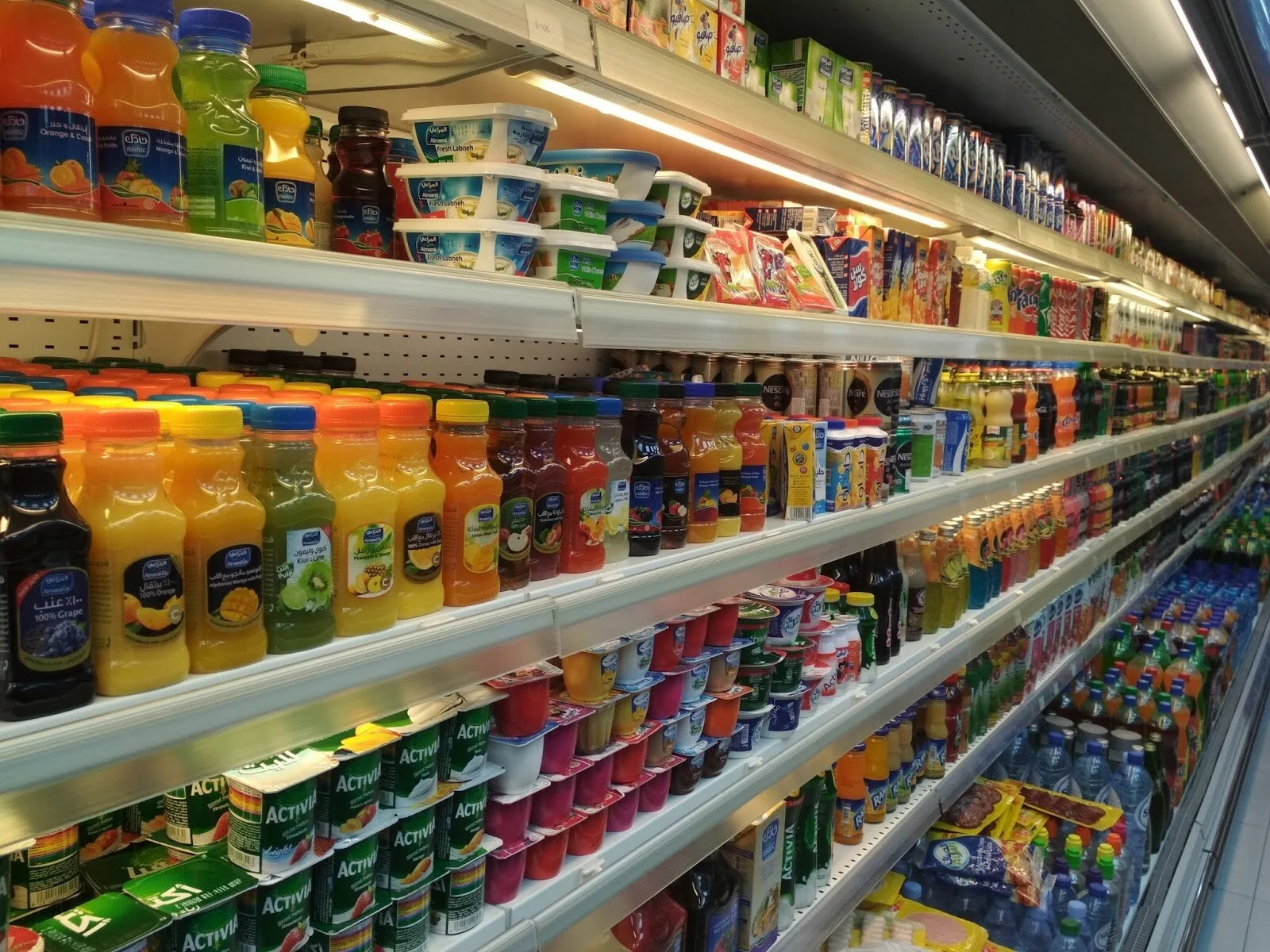
Is there a large variation in prices during Ramadan and Eid in Bahrain? If so, to what extent do they change? Through a basic data analytic overview, this article will investigate whether we observe such a fluctuation in prices during the season of Ramadan and Eid in Bahrain. Understanding whether these prices change seasonally can prove to be important for policymakers in the country. In particular, economists believe that decision-makers should use data based on the real trends of price levels, which is achieved by applying seasonal adjustments to the data.

Since the initial rise of electric vehicles and other transportation methods, there have been concerns that usage of electric transportation may have negative environmental impacts depending on the source of electricity used to charge electric vehicles. As a result, over the years, there have been continuous efforts to estimate the environmental impacts of electric cars and transportation methods on the environment based on electricity sources used.
In this extended article, we will attempt to use research conducted elsewhere to estimate, whether it makes sense for consumers to purchase an electric vehicle in the GCC for environmental reasons. The reason behind this is that in recent years, there has been a growing trend of owning Teslas in the GCC, if not, at least in the UAE with the opening of the first Tesla dealership with acceptance of online orders. Therefore, we should ask the question, with the GCC’s electricity mix, would it make sense to import, and use electric cars given the potential environmental impacts it may have for the given grid being used in the GCC?

Bahrain is known to have extreme temperatures during the summer months. As a result, those who work outdoors in construction are exposed to the dangers of heat exhaustion, as well as potentially heat stroke if they are allowed to continue working outside in extreme conditions. As we approach the summer months and preparations are underway to ensure the safety of these workers (via policies such as bans on outdoor work during high temperatures), one must ask, to what extent will we face a drop in productivity during hotter conditions?

long analytical pieces

COVID-19 had a profound impact on global economic output, resulting in a contraction of approximately 3% in world GDP in 2020. Furthermore, the impact was not only significant but also unevenly distributed, with certain nations being more severely affected than others. While the effects of COVID-19 on economic performance are well-documented on both global and national levels, one may ask: what effect did COVID-19 have on a regional scale?
In this analysis, we develop a simple model to understand the impact of the COVID-19 pandemic on the private economic output of different municipalities in Bahrain. To the authors' knowledge, this is not only the first study to explore the municipal-level effects of the COVID-19 pandemic on economic growth but also the first to estimate private economic activity at the municipal level for the Kingdom of Bahrain. As of 2022, our results indicate that most municipalities had returned to their pre-pandemic levels of economic activity. However, when compared to pre-pandemic economic trends, the results show that the Muharraq and Northern Municipalities were the most affected compared to the rest of the economy.

In this discussion paper, we look at the potential effects of adopting electric cars and their outcomes on the Kingdom of Bahrains Energy consumption and CO2 emissions. We construct a simplified model that looks at different potential adoption rates of electric vehicles and how this affects transportation energy and emissions outcomes based on assumptions about fuel consumption, internal combustion engine (ICE) vehicle fuel efficiencies, and other essential variables. We find that under our assumptions, the Kingdom would see 17% lower energy usage for transportation sector, 0.84% lower overall energy usage, 8% reduction in per year emissions for the transportation sector, and a 0.51% reduction in overall emissions per year.

COVID-19 has led to severe disruptions in how society interacts in 2020 and onwards. With COVID-19 restrictions being placed in the earlier stages of the pandemic, the need for daily mobility towards work, education, and leisure centers had dwindled significantly. However, it is unknown to what extent the COVID-19 pandemic and its restrictions affected fuel demand in the Kingdom of Bahrain. This article aims to explore how the early-stage pandemic affected gasoline and diesel consumption in the Kingdom. Furthermore, we also extrapolate from the findings on the potential hypothetical benefits of transitioning to a “work at home” type of environment and whether this would have any significant economic effects that the Kingdom would reap.

This discussion paper looks at the latest employment data published by LMRA. In particular, we look at Bahraini employment ratios derived using working-age population estimates from IGA. We find that overall, Bahraini employment ratios have decreased in recent years, with a particular notice in a decline of male employment ratios.

Recent legislation passed by some governments worldwide requires mandatory nutrition labeling at all restaurants. The perceived benefits of nutrition labeling at restaurants are that consumers will have the ability to decide meals and dishes with more consumer information, thus potentially allowing those consumers to consume healthier foods, and potentially reduce caloric intake. The result from this may potentially allow for a reduction in obesity levels with healthier food choices by consumers, thus potentially reducing the overall impact of health costs on the economy and a positive effect on productivity levels. This article will look at the policy and see the potential impacts towards final consumers, restaurants, and the economy as a whole, and the benefits and costs associated with nutrition labeling. Last we shall look if other GCC Nations should follow the footsteps of other nations in Mandatory nutrition labeling.

“Bahrain’s 2017 so far can be described as healthy growth, but with some concerns about how future international markets may counteract the strong growth which the Kingdom has seen. The data which we have varies from Quarter two or Quarter three. Our primary source is the Economic Development Board quarter three report on Bahrain’s economic growth (unless otherwise stated).”
Since the beginning of the year, the world has experienced rapid and persistently high inflation rates. Some countries, such as the United Kingdom, are estimated to have inflation rates of 18% by Citibank in early 2023 (Schomberg and Miliken, 2022). Such figures for developed nations are rather high, especially compared to their historical trends, where long-run inflation in the UK is approximately 2.6% (Keane, 2022). As inflation rates across multiple developed and developing nations remain high, is Bahrain experiencing a similar trend of high inflation rates compared to its trends?